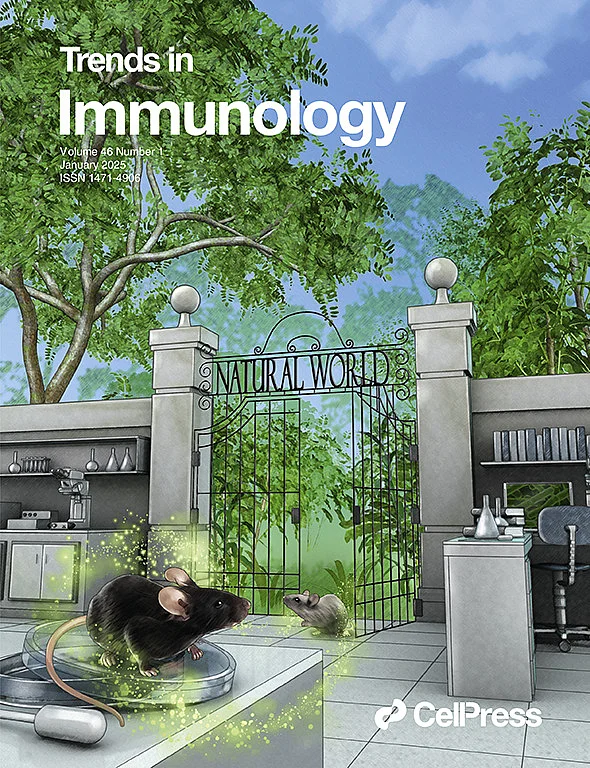
Born to be Wild: Utilizing Natural Microbiota for Reliable Biomedical Research
The natural gut microbiota of wild mice opens up new possibilities for more robust and transferable results in biomedical research.
Why do laboratory mice sometimes react differently to the same experiments? New findings show that the microbiota – i.e. the totality of microorganisms in the intestine – plays a central role in this. Standardised housing conditions are often insufficient to replicate the natural diversity of microbial ecosystems.
The interaction between host and microbiota forms a highly complex ‘metaorganism’ system that influences the physiology of the mouse through genes from both sides – i.e. both the host and the microbes. Despite standardised conditions in experimental laboratories, experiments with SPF (specific pathogen-free) laboratory mice often produce contradictory results. The reason: differences in microbial composition, which are strongly dependent on housing conditions.
The SPF mice currently in use have significantly lower microbial diversity than wild mice or humans. This means that a central aspect of ecological complexity, which can be crucial for a stable and resilient immune response, is missing. Particularly impressive: in so-called ‘cohousing’ experiments, laboratory mice can be colonised with natural microbiota – which reliably displaces the standardised intestinal flora.
The study also shows that the intestine is not a uniform habitat: different ecological niches are occupied by specialised microbes that are optimally adapted to their respective environment. This specialisation makes the system stable – but at the same time less receptive to new microbial species.
The conclusion: in order to achieve reliable and transferable results in biomedical research, microbial complexity must be taken into account to a greater extent – because not all mice have the same microbial profile.